The Hidden Fees on Creative Expression: What We Didn’t Learn From ‘Rule of Rose’
An insight into the payment processing scandal seen through the lens of a similar infamous debacle occuring almost two decades prior.

Notice: article contains images potentially unsuitable for viewing at work, as well as discussions of sexual abuse and trauma. Please exercise caution if you are sensitive to these topics.
Notice: article contains major plot spoilers for Rule of Rose, and mild spoilers for Catherine, Persona 5 and Yakuza 0.
The year is 2005. While the PlayStation 2’s time in the spotlight may be coming to a close as the gaming community turns their attention to the upcoming seventh generation consoles, Sony’s legendary platform refused to die without adding a few last-minute hits to its already unparalleled game library. One of these titles in the works was the upcoming survival horror gem Rule of Rose, slowly winding down its production at 25-strong indie studio Punchline, funded and published by Sony Computer Entertainment, even garnering the support of the British government at times in an effort to accurately depict the real-life events influencing its setting.
Rule of Rose had a strange premise - aligning with Sony’s goal of nurturing a brand new survival horror IP to compete with the platform-agnostic giants like Resident Evil and Silent Hill, developer Punchline set their sights on the lesser-explored psychological aspects of horror. The end result: a surreal insight into the nature of children when left to their own devices.
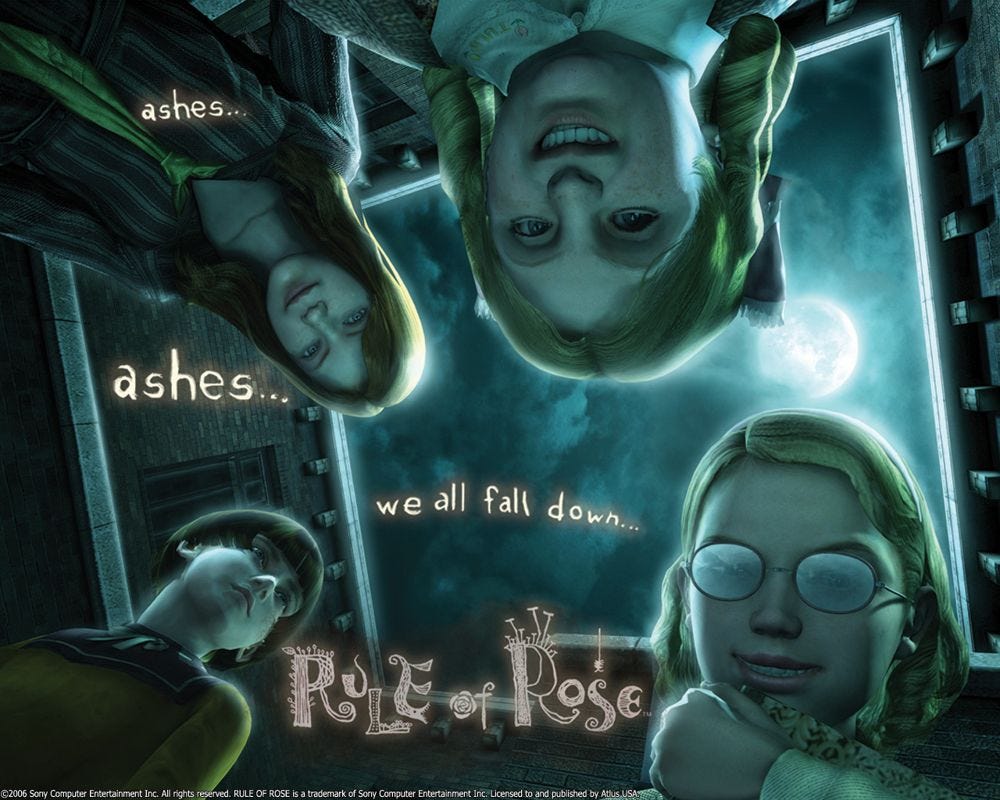
This unorthodox story sees the player explore a neglected orphanage inhabited almost entirely by young children - in the near complete absence of suitable adult role models, these children form a hierarchical society governed by a select few elite members known as the Red Crayon Aristocrats. The resulting power dynamic has a deep impact on all of the orphanage’s residents, leading them further and further into a twisted view of reality and moral principles - giving us a somewhat disturbing indication of the darker secrets festering beneath the façade of a young child’s innocence.
The game touches on topics of abuse, trauma, mental health, relationships and sexuality - a potentially startling list given the infancy of the majority of the cast, but Rule of Rose has a clever secret. As the player explores Rose Garden Orphanage as 19-year-old Jennifer, it slowly becomes evident that we are not seeing the narrative’s events, nor the lives of those under the authority of the Red Crayon Aristocrats as they occur - the story as we experience it is simply the product of Jennifer revisiting traumatic childhood memories as an adult.
Obviously, this renders protagonist Jennifer an unreliable narrator by definition - anything we see or hear is directly subject to inaccuracies due to childhood trauma-induced memory loss or merely recollections fading to the passage of time. This allows Rule of Rose to toy with such heavy topics without ever having to resort to explicit depictions to get its point across, as just about everything is left up to interpretation with some gentle guidance - evidenced by the numerous fan theory blogs that appeared following the game’s release. Due to all of this, Rule of Rose is an unusually tame experience for a survival horror title, landing itself a 16+ age rating in Europe with the only descriptor mentioning the violence in the game’s combat.

With Rule of Rose’s development complete, its upcoming release seemed hopeful - a heartwarming success story of an unknown studio granted the necessary financial backing to deliver a unique, hauntingly beautiful experience to expectant fans of the genre. Unfortunately, an unexpected turn of events saw Rule of Rose thrust into one of the most unfair censorship scandals in gaming history on an unprecedented scale.
The affair can be traced back to an unusual source - Italian games forum Games.It, where 17-year-old aspiring game journalist Chris Darril would post his review of Rule of Rose, written after playing through an early copy of the title imported from Japan. His review wasn’t problematic at all, displaying a true appreciation for the game and its delicate handling of sensitive themes - the real threat arrived in an even more unexpected form. Italian readers of Panorama would soon pick up their issue of the popular magazine to be greeted with a large render of major characters Diana and Meg from the upcoming Sony-published title Rule of Rose spanning the front cover with a particularly provocative headline.

Reading the advertised article inside reveals no original journalism, but a series of extracts blatantly plagiarised from Chris’s amateur review juxtaposed with sensationalised interjections on a game they hadn’t played, written specifically to sway discussion on video game violence - a hot topic around that era. This shocking example of poor journalistic integrity set Rule of Rose up as a target for an unprecedented onslaught of legal and reputational challenges. Word quickly reached European Union justice minister Franco Frattini who slandered the game, citing various examples of obscene content as fabricated by the Panorama article. While his appeal to the European ratings board PEGI was met with little success, it sparked a wider parliamentary debate concerning a potential ban on the sale of Rule of Rose as a whole.

No official measures were ever taken, and no bans were put in place, allowing Rule of Rose to proceed with its western release. However, European publisher 505 Games saw the upcoming title as an unjustifiable risk to their brand’s image, cancelling plans for distribution in the United Kingdom, Australia and New Zealand. Aside from these exceptions, developer Punchline were able to get their misunderstood gem onto store shelves, with publisher Atlus taking over distribution in American regions following Sony Computer Entertainment’s abrupt departure from the project.
Unfortunately, the damage was done, and the game met commercial failure upon release. Development studio Punchline soon disbanded, and Rule of Rose faded back into obscurity, despite having such promising circumstances just months prior.
As disappointing as it is to see a potential classic meet such little fanfare at launch, the history of Rule of Rose is an example of the legal systems working as intended, for what it’s worth - despite several powerful figures in European politics pushing for a complete prohibition on sale of the title, no such action was ever achieved. Rule of Rose may have been a victim of severe defamation and gross corporate negligence, it still got its chance at release with no legal barriers at the end of it all. This debacle should have served as a lesson on freedom of expression in fiction, to ensure no works ever met the same fate - and a rapidly growing acceptance of video games as an art form should’ve prevented any events leading up to a disaster like this.
Skipping almost two decades in the future, however, we're met with yet another scandal - one that, in spite of a very small number of voices sparking it, threatens to totally eclipse the tragedy that befell Rule of Rose. In the aforementioned case, there was no central authority to impose restrictions on the release of the game - even a total ban in European regions would’ve required a collective agreement from a number of parties, with many procedures in place to ensure fairness in their policies.
With the decline in physical video game sales worldwide and the ongoing push for digital downloads, one central gatekeeper quietly solidified its position in the supply chain - the payment processing industry.
Visa and Mastercard broke headlines earlier this month when they bowed to activist pressure, forcing digital storefront Valve to remove hundreds of adult-themed games from sale. If you read the initial list of affected titles, you’d be forgiven for averting your eyes from the situation as I did - the vast majority appearing to be little more than cheap parodies prioritising shock value above all else. Still, the idea of monopolistic payment processing companies having their input on what we’re permitted to spend our money on was alarming, and it didn’t take long for its true impact to reveal itself.
Soon following Steam’s wave of removals, another platform took a significant hit. Itch, a digital storefront specialising in making publishing fairer and more accessible for even the smallest independent developers, posted a heavily controversial blog post detailing recent changes to the platform. Due to their more ‘hands-off’ approach to curation, targeted removals weren’t so easily achieved and the company was forced to temporarily prevent all games with adult themes from appearing in the site’s search functions.
Obviously, this initial action came in response to abrupt pressure from the payment processors that the platform depends on, and would’ve fixed itself with time as its administrators combed through the catalogue and individually restored those unfairly removed. However, a more permanent shift soon appeared in the form of a new list of regulations added to the site’s content policy.
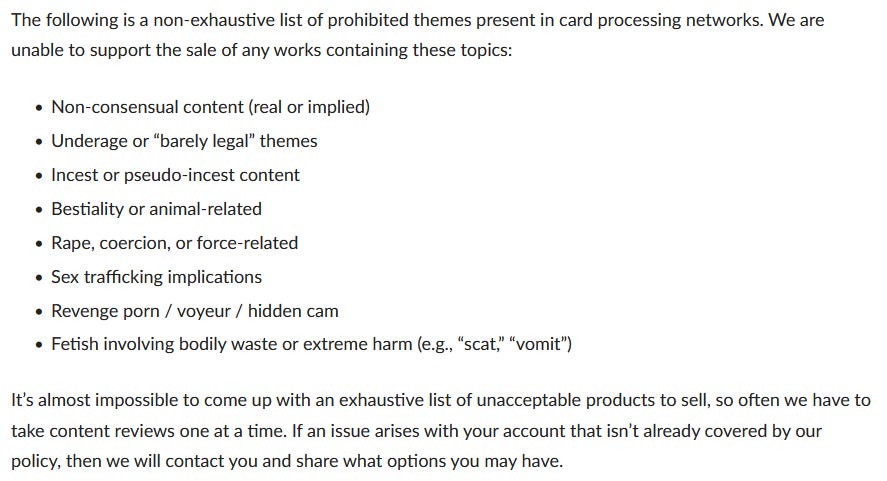
Platforms depending on external payment processors have always had vague clauses about content being subject to removal at their discretion, but it’s historically been very rare to see works of fiction targeted by their policies. This published list of prohibited topics is a major statement to the gaming industry that we’ve yet to see the full extent of.
Being a much smaller platform than the likes of Steam, Itch had no choice here - the consequences of losing the service of Visa and Mastercard would have a devastating impact on the platform and the thousands of creators depending on the sales they receive from it. Between distancing themselves from a small percentage of developers violating these terms, or potentially ruining the site’s viability as an option for everyone relying on it - the ‘correct’ choice here is unfortunately obvious.
As we saw with Rule of Rose all the way back then, once again it’s the smallest creators with no ability to fight back that suffer the most from these judgements, and are most frequently used as an example to the industry. Large corporations such as Visa and Mastercard can easily live without the small amount of revenue generated by these more niche communities - but look a little closer, and you might uncover the giants they wouldn’t dare alienate.
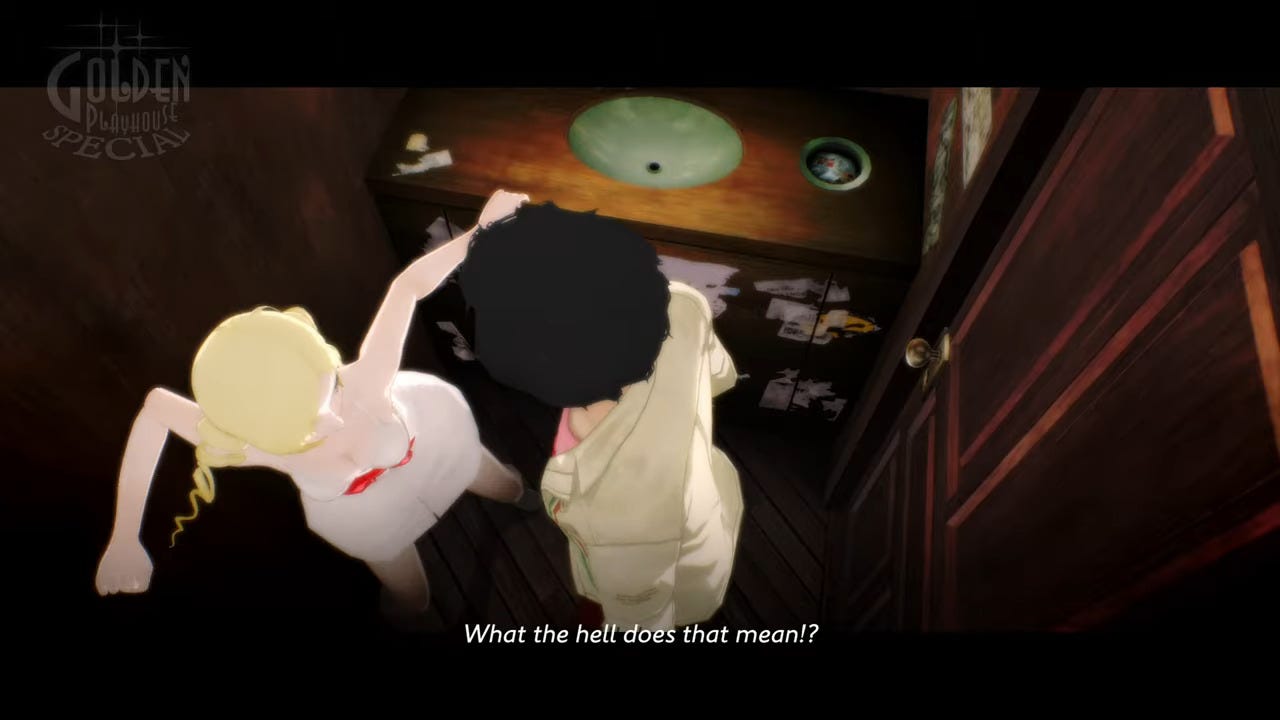
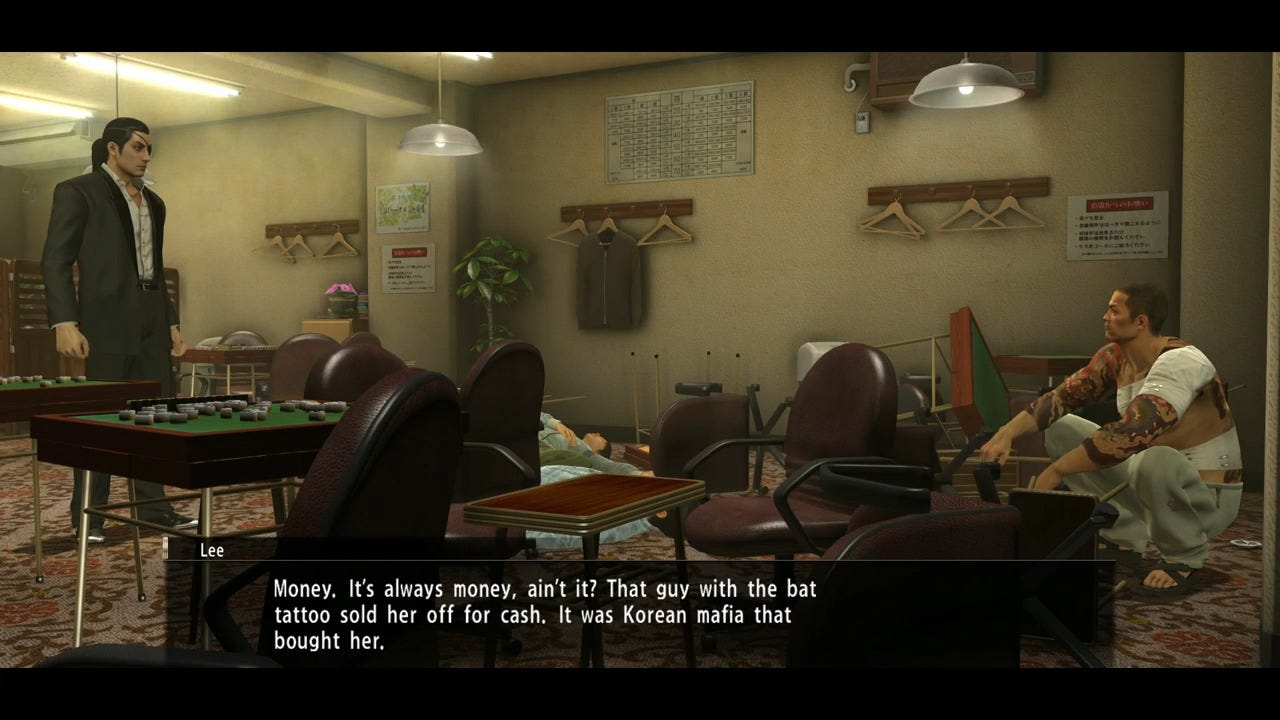

All three games pictured have been published in the last five years by SEGA, a long-time juggernaut in the gaming industry, and they demonstrate content that clearly falls within the categories of content prohibited for independent developers on platforms like Itch and Steam. While these depictions do serve a clear purpose in their games’ narratives, they certainly shouldn’t be considered immune to criticism either - but this demonstrably isn’t how they’re perceived by profit-driven middlemen like the aforementioned payment processors.
The message sent here is clear: discussing sensitive topics is a right reserved only for those who generate enough revenue to deserve it. Independent developers, including the survivors of abuse and trauma who often turn to the medium to tell their stories, simply aren’t given the same benefit of the doubt. There’s no room for interpretation - if Visa and Mastercard don’t see you as a viable asset, you do not have the right to explore these themes in your work.
A week later, solo game developer Cara Cadaver spoke out against Steam’s ruling on her upcoming game, VILE: Exhumed. VILE was set to be a visual-novel-esque adventure diving into “themes of sexual content, violence, and abusive and harmful language” - but Steam’s recent debacle led to a total ban on the game, citing the specific rule violated: “sexual content with depictions of real people”. This may appear to be a valid reason to withhold the title from sale, but the truth is somewhat unsettling - the ‘real person’ involved was Cadaver herself, opting to use photos of herself in place of the game’s protagonist to inject a more personal connection into the narrative.
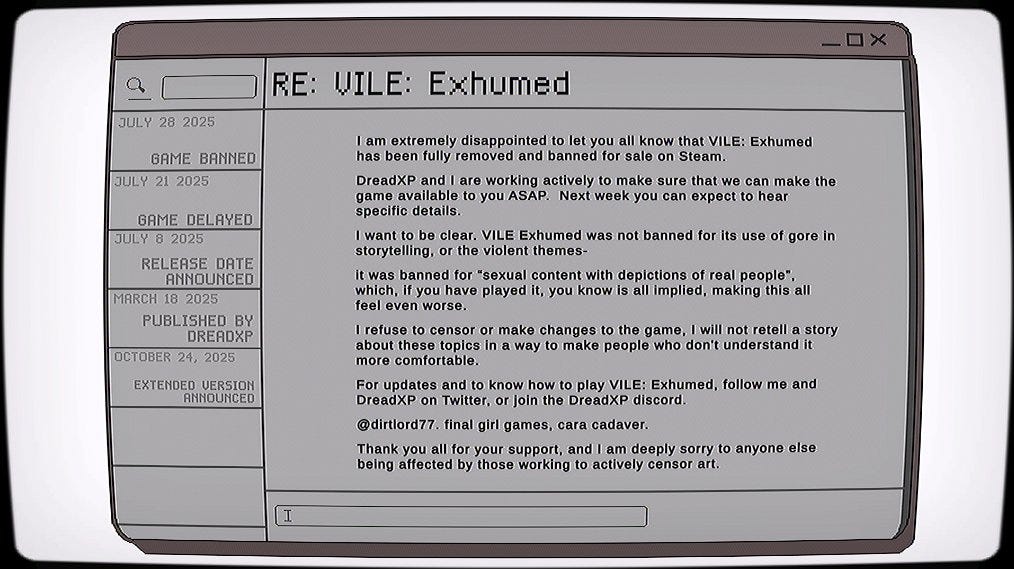
Cadaver rightly refused to back down, opting to explore alternative options to tell her story the way it was meant to be depicted. She’s unfortunately only the first in what is likely to be a series of independent creators told that their stories don’t align with the moral views of a select few corporations that nobody would normally consider to be facilitating their distribution. It’s a significantly worse dilemma than the circumstances behind Rule of Rose, as this time it becomes clear that a few central entities have quietly positioned themselves as the ultimate monitors for all paid content published on the internet, reserving the right to threaten the livelihoods of anyone whose works they consider unacceptable - even those that contain zero legally objectionable content.
Only time will tell the full impact of this precedent - whether a wider apathy towards corporate censorship will lead to a crackdown on even the largest players in the gaming industry, or even if it will begin to manifest itself into other forms of entertainment. For now, all we can do is make our voices heard - let Visa and Mastercard know that we’re capable of exercising our right to decide for ourselves which legal content we wish to engage with. I just hope that we can eventually return to a time when freedom of expression in art didn’t come with a monetary price tag - a right that Rule of Rose evidently didn’t secure as tightly as we’d hoped.